Goodbye Friend
Maj. Jose J. Miranda, MD, MPH, of Fayetteville, was born in Puerto Rico on July 10, 1975, to Jose and Mercedes Miranda. He received a commission in the United States Army as a second lieutenant in 1997 to attend Yale School of Medicine on the United States Army Health Professions Scholarship Program. He received his Bachelor of Arts in biology from the University of Kansas as a Distinguished Graduate in 1997; his master’s degree from the Harvard School of Medicine in Boston in 2001; and his medical degree from the Yale School of Medicine in 2002.
Maj. Miranda completed his internship and academic residency in orthopaedic surgery at Eisenhower Army Medical Center in 2006. His first assignment was a staff orthopaedic surgeon at Womack Army Medical Center at Fort Bragg in 2007. He became board eligible and passed Part I Orthopaedic Surgery Boards in July 2007. Earlier this year, in 2008, he became a member of the Institution Review Board.
Maj. Miranda’s awards include the the Army Commendation Medal and Army Achievement Medal. His decorations include the Global War on Terrorism Service Medal; the National Defense Service Medal; and the Army Service Ribbon. In addition, he was very distinguished in his medical career. His medical and education awards include the Eisenhower AMC Outstanding Research Presentation; Outstanding Poster Award for Study of Lumbar Spine; University of Kansas Outstanding Leader in Biology; Sigma Chi Order of the Scroll Recipient; and George C. Ruhle Top Sigma Chi Scholar.
Maj. Miranda will forever be a member of Alpha Company, Womack Army Medical Center, and will be missed by the soldiers, NCOs, officers and civilians of the Department of Orthopaedics and Rehabilitation and Womack Army Medical Center.
He is survived by his father, Jose; his mother, Mercedes; his brother, Alex, his nephew, Gavin; and a host of family and friends.
The family will receive friends from 6 to 9 tonight, Oct. 5, 2008, at Rogers and Breece Funeral Home in Fayetteville.
A memorial Mass will be conducted at noon Monday, Oct. 6, 2008, in Rogers and Breece Funeral Home chapel, with Chaplain Capt. Alan Irizarry officiating.
Services entrusted to Rogers and Breece Funeral Home of Fayetteville.
from the obituaries page of the Fayetteville Observer, Fayetteville North Carolina


4 AM

This is me at 4 AM up and ready for clinicals. Actually, I was up at 4 but it wasn't til about 4:30 that I was out of the shower and at this point. I think I hate hospitals that want me there at 6 AM.
I know you're tired of my clinical stories...
...but today was a pretty good day and I wanted to share it with you.
My classmate who was supposed to be there with me called in sick today so I was alone. The day started as normal and went well. I did get a whole bunch of checkoffs I needed and almost got a few that I had never done. I had to get an ABG on a patient who had an arterial line in place. This was exciting because it was the first one I had actually seen. Unfortunately it wasn't working too well because when I withdrew the thingamajiggy, the blood only came up about halfway.
The next thing I attempted was nasotracheal suctioning. Thats when you run the tube into the patients nose and down into the lungs. Not a pleasant experience for either of us (moreso for the patient, of course). To make matters worse, my teacher happened to be there. I only got the catheter about a third of the way down. The patient complained a lot during this process.
Gave my Notice
Well, it's official. I just sent the email to give my notice. October 1st I will no longer be an Emergency Room Secretary (clerical coordinator) and become a Respiratory Care Assistant. This is the student job that we are eligible to get when we enter the second year of the program. The level of responsibility varies depending on the facility. At the hospital I am at the RCA get's to do breathing treatments and patient care. I don't get to do critical care and emergency room/trauma care. I will make 3 or 4 dollars more an hour and get valuable experience.
Another day, another extubation
 ***Click on links to see pictures***
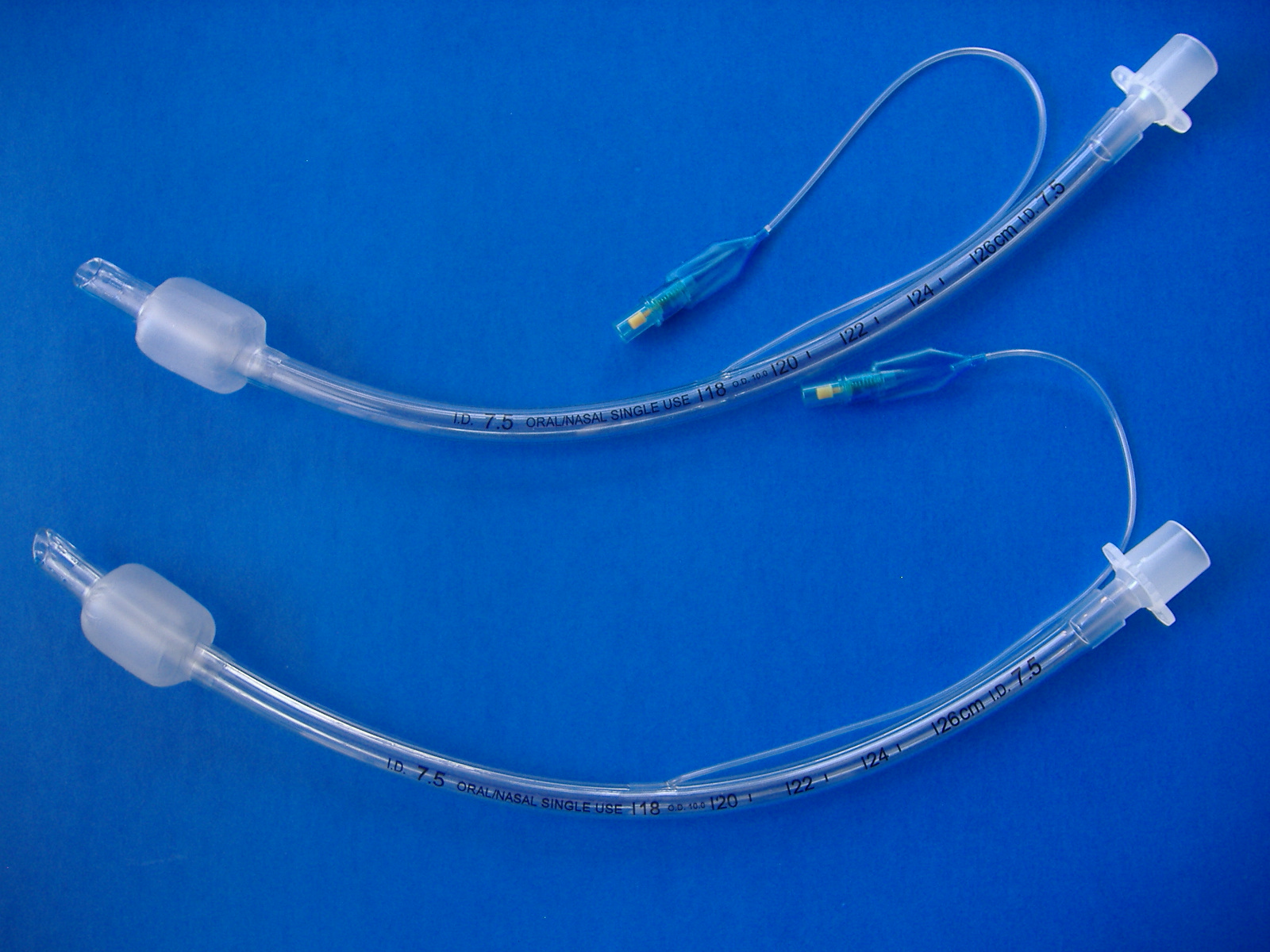
Well, I made it through another day of clinicals. It wasn't a very exciting day but it was ok. I did get my third extubation. That is when a patient who is on a mechanical ventilator has improved to the point where they no longer need it. Then you extubate (the opposite of intubate) them. Here's how it works.
First you explain to them whats going on. You get one of the pads that are normally placed under the patient and spread it out on their chest. You deflate the cuff that holds the ET tube in place and listen at their neck for air movement. If you don't hear air, that means the airway has swollen and you shouldn't remove the tube. Then you re-inflate the cuff. You then suction them out with the closed suction catheter that is attached. Then you suction out the mouth and oral cavity with the Yankauer (also known as the Yonker). Then you turn off the ventilator (or place it in standby as we did with the Servo I pictured to the right). This is to ensure that it doesn't spew secretions everywhere when you pull out the tube. Then you tell the patient to cough and you pull out the tube. You then place the patient on an aerosol mask with a cool mist provided by a large volume nebulizer. Then you hope for the best.
More from the conference

Respiratory Conference

This is me and 2 classmates Sarah, and Trista in the Sputum Bowl

Sarah, Leann, Trista, and Eryn (with me in the back)